Medically reviewed by the clinical team at Quick Neuro Relief and Stroke Centre, Lahore. Last reviewed October 2026.
Physiotherapy for Stroke Patients at Home: A Complete Guide for Lahore Families
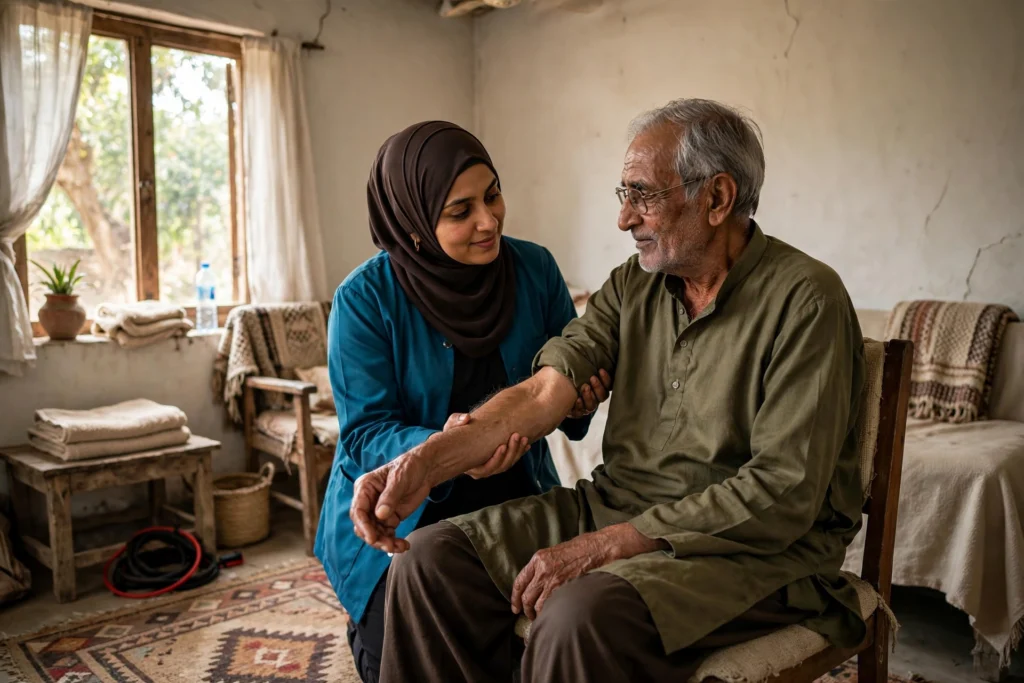
Yes, physiotherapy for stroke patients at home in Lahore delivers real recovery results when a trained physiotherapist designs the program and the family follows it daily. A good home physiotherapy program uses the same core exercises found in clinics, adapted to your rooms and furniture, and it removes the travel strain that breaks so many rehab routines. This guide covers the exercises that matter most, how home sessions work in Lahore, typical costs, caregiver duties, and the safety rules every family must follow.
Table of Contents
Key Takeaways
- A professional assessment must come first. A physiotherapist should evaluate strength, balance, and fall risk before any exercise plan starts.
- Daily practice between sessions drives recovery more than the sessions alone, so caregivers play the central role.
- Most stroke physiotherapy exercises at home need no equipment: a sturdy chair, a bed, and a non slip floor are enough to start.
- Seek urgent medical help for new weakness, slurred speech, vision loss, chest pain, or a fall that causes injury.
- Physiotherapy for stroke patients at home in Lahore works best when sessions start within two weeks of hospital discharge.
- Choose a licensed provider with stroke experience when arranging physiotherapy for stroke patients at home in Lahore.
Why Physiotherapy for Stroke Patients at Home in Lahore Works
After a stroke, the brain needs repeated, guided movement to rebuild lost connections. Physiotherapy for stroke patients at home in Lahore provides this repetition in the environment where the patient actually lives, which helps skills transfer faster to daily life. Reaching for a kitchen shelf, standing up from your own sofa, and walking your own hallway all count as functional training.
Many families start clinic rehab after hospital discharge but stop within weeks because travel exhausts the patient. A home physiotherapy program solves this dropout problem. The physiotherapist comes to you, the patient rests in their own bed between exercises, and sessions happen on a schedule the family can sustain for months.
Research in stroke rehabilitation shows that intensity and consistency matter more than location. A patient who completes guided exercises five days a week at home usually progresses faster than one who visits a clinic twice a week and does nothing in between. That consistency is the real reason physiotherapy for stroke patients at home in Lahore produces strong outcomes.
How a Home Physiotherapy Program Starts
A proper home program never begins with exercises. It begins with an assessment visit where the physiotherapist evaluates muscle strength on each side, joint stiffness, sitting and standing balance, walking ability, pain levels, and fall risk. From this assessment, the therapist builds a written plan with clear daily exercises, repetition counts, and progression rules. Keep this plan visible, on the fridge or in a notebook. If a provider offers home visits but skips the assessment, treat that as a warning sign and look elsewhere. Any clinic offering physiotherapy for stroke patients at home in Lahore should hand you this written plan on the first visit.
Physiotherapy for Stroke Patients at Home in Lahore: The Core Exercise Routine
The exercises below form the backbone of most home programs. They appear here for education only; your physiotherapist must confirm which ones suit the patient and demonstrate correct form before you begin. The American Stroke Association’s recovery guidance reinforces the same principle behind every program: rehabilitation works best when it starts early and continues consistently.
Upper Limb Exercises for the Arm and Hand
Stroke often weakens one arm and hand, so physiotherapy exercises for stroke patients usually start here. Seated shoulder rolls and gentle arm raises rebuild shoulder movement and prevent the painful stiffness that develops when a weak arm hangs unused. The therapist may add table top slides across a table surface, plus grip practice with a soft ball or rolled towel.
Lower Limb Exercises for the Leg and Foot
Leg strength decides whether a patient can stand and walk again. Seated knee lifts, ankle circles, and heel slides on the bed keep the lower limb active from day one. As strength improves, the therapist introduces sit to stand practice from a sturdy chair, which trains the exact muscles needed for independence. Foot drop, where the toes drag during walking, is common after stroke; the physiotherapist may teach ankle strengthening and recommend a simple brace.
Balance and Walking Practice
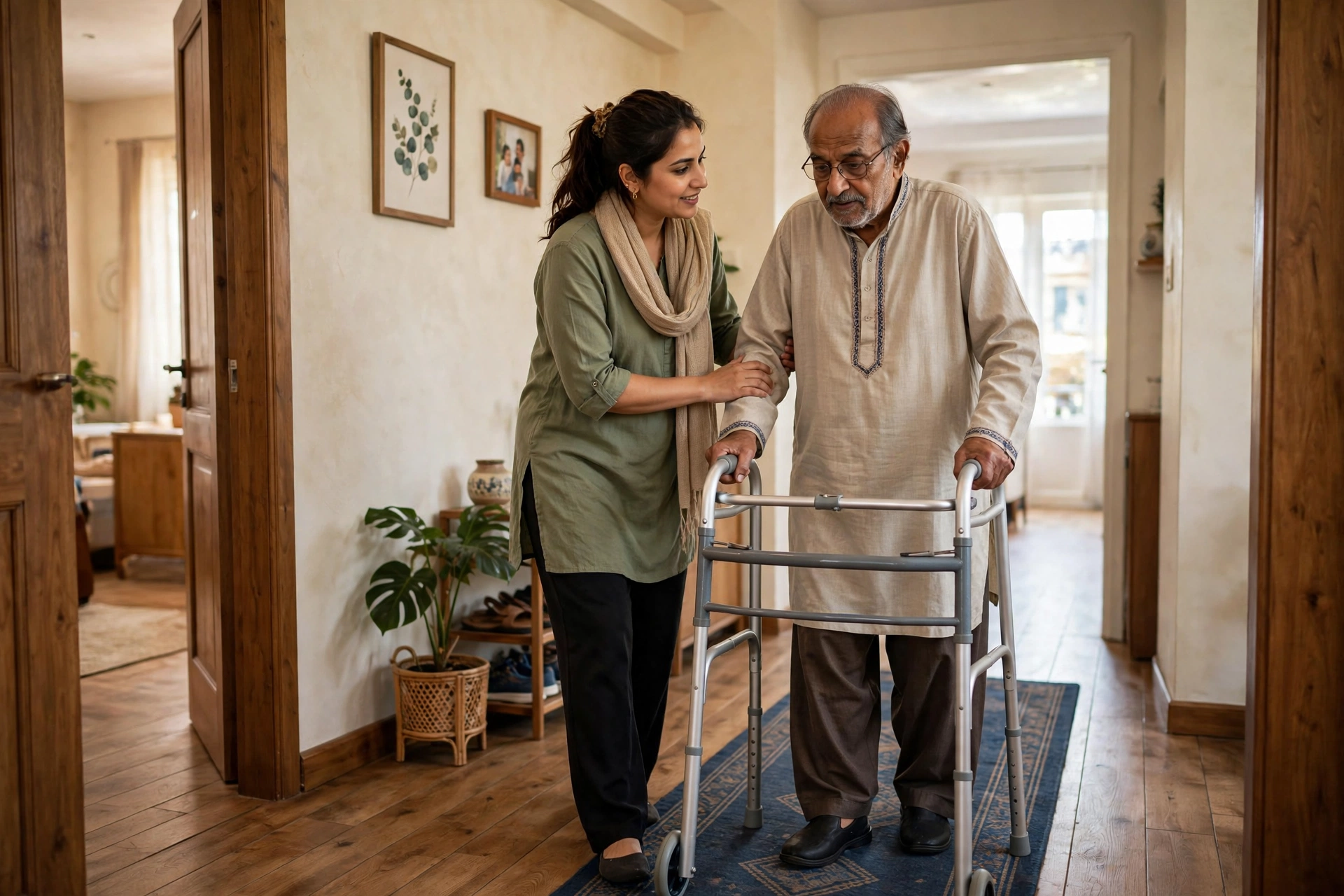
Balance training progresses in careful stages: sitting balance on the bed edge, standing with a walker or furniture support, then short hallway walks with the caregiver on the weak side. Never rush this sequence, because most falls happen when families advance walking practice faster than the therapist advised. Clear the walking path before every session, keep the floor dry, and make sure the patient wears non slip footwear.
Across a day, physiotherapy for stroke patients at home in Lahore typically means a morning session of 30 to 45 minutes covering arm, leg, and balance exercises, plus two or three short 10 minute practice blocks later in the day. Short, frequent practice beats one exhausting session.
How to Help a Stroke Patient at Home Between Sessions
Caregivers are the engine of home rehab. The therapist visits a few times a week, but the family guides practice every day. Learning how to help a stroke patient at home correctly multiplies the value of every session of physiotherapy for stroke patients at home in Lahore.
First, learn the exercises yourself. Ask the physiotherapist to teach you each movement during a session and practice under supervision until your form is correct. Wrong technique can strain joints or teach bad movement patterns that are hard to unlearn. Correct caregiver technique keeps physiotherapy for stroke patients at home in Lahore safe and effective between visits.
Second, build rehab into the day. Encourage the patient to use the weak hand for small tasks like holding a cup, practice standing during TV ad breaks, and walk to the kitchen instead of being served in bed.
Third, protect motivation and your own energy. Recovery after stroke is slow and frustrating, so celebrate small wins like an extra repetition or a steadier stand, and keep a simple progress chart on the wall. Watch for withdrawal or hopelessness and raise it with the doctor, since depression is common after stroke. Caregiver burnout is real too, so share duties among family members where possible.
What You Should Not Do After a Stroke at Home
Safety rules protect both the patient and the progress they have made. Never leave a patient with poor balance alone in the bathroom, since wet floors cause the most dangerous home falls. Do not force stiff joints through pain or massage a swollen weak hand aggressively, because this can cause injury. Never let the patient skip prescribed blood pressure or blood thinning medicines, since a second stroke can strike during the recovery period.
Do not compare recovery timelines with other patients. Every stroke differs in location and severity. And never stop physiotherapy for stroke patients at home in Lahore abruptly because the patient “feels fine” for a few days; recovery gains fade quickly without continued practice, especially in the first six months.
Cost of Home Physiotherapy Services in Lahore
Home physiotherapy services in Lahore usually charge per session, with rates varying by the therapist’s experience, your area, and the length of the visit. A typical session lasts 45 minutes to an hour, and most families book three to five sessions per week in the early months, reducing frequency as the patient gains independence.
Compare the full picture before deciding. Clinic sessions may cost less per visit, but add travel fares, the caregiver’s time off work, and the patient’s energy spent on the road. For many families, physiotherapy for stroke patients at home in Lahore works out similar or cheaper overall, with far better attendance. Ask for a written monthly package price before the first visit.
When a Rehab Centre Fits Better Than Home Care
Physiotherapy for stroke patients at home in Lahore covers most recovery needs, but some situations call for a centre. Patients who need daily occupational therapy, speech therapy, and physiotherapy together often progress faster where all specialists work in one place. Complex cases with severe spasticity or swallowing problems also benefit from centre equipment and closer medical supervision.
Many families use both: home physiotherapy for daily practice and periodic centre visits for assessments and specialist input. If you want to understand what a full centre program includes, read our guide on stroke rehabilitation centres in Lahore, their services and costs. Families tracking long term progress should also review the stroke recovery timeline month by month to set realistic expectations.
Frequently Asked Questions
How soon can physiotherapy for stroke patients at home in Lahore start?
Physiotherapy often begins in the hospital within days of a stroke, once the medical team confirms the patient is stable. Physiotherapy for stroke patients at home in Lahore can usually start within a week or two of discharge. Earlier starts generally produce better results, so arrange the assessment before the patient leaves the hospital if possible.
How many home sessions does a stroke patient need per week?
Most patients begin with three to five guided sessions per week plus daily caregiver supervised practice. The total program often runs three to six months, with some patients continuing maintenance exercises for a year or more.
Can a family member do physiotherapy without a professional?
Family members should never design the program alone, but they are essential for daily practice. The safe model is professional assessment and planning, therapist taught exercises, and caregiver supervised repetition between visits. This teamwork is what makes physiotherapy for stroke patients at home in Lahore effective.
What equipment do we need at home?
Most programs start with household items: a sturdy armless chair, a bed, a soft ball, and a towel. The therapist may later suggest resistance bands, a walker, or an ankle brace depending on progress. Buy equipment only on the therapist’s recommendation to avoid wasting money. The therapist will expand this list as physiotherapy for stroke patients at home in Lahore moves through the recovery stages.
Starting physiotherapy for stroke patients at home in Lahore early, and following the daily plan your therapist sets, gives your family the best chance of a strong and steady recovery.
Disclaimer: This article is for general information only and does not replace professional medical advice. Always consult a qualified doctor or physiotherapist before starting any exercise program after a stroke.