What Are the 7 Stages of Stroke Recovery?
There are 7 stages, from no voluntary movement to normal movement. Here is the full list in order.
- Stage 1: Flaccid, no voluntary movement
- Stage 2: First twitches and early stiffness
- Stage 3: Stiffness peaks and voluntary control begins
- Stage 4: Movement breaks free as stiffness fades
- Stage 5: Complex and coordinated movements return
- Stage 6: Stiffness almost gone and coordination restored
- Stage 7: Normal function restored
Stroke recovery follows a predictable pattern that specialists divide into the 7 stages of stroke recovery, a framework known as the Brunnstrom stages. A patient begins with no voluntary movement at all and then, stage by stage, regains control until movement becomes smooth and coordinated again. Knowing which stage your loved one is in helps your family set honest goals and choose the right therapy at the right time.
Key Takeaways
- The 7 stages of stroke recovery describe how movement returns, from complete limpness to normal function.
- Stiffness, called spasticity, rises in the early stages and then fades as real control returns.
- The fastest progress usually happens in the first three months, but recovery can continue for years.
- Daily physiotherapy matched to the current stage gives the brain the repetition it needs to rewire.
- Not every patient reaches stage 7, yet most patients improve far more than the first weeks suggest.
The 7 Stages of Stroke Recovery, One by One
Signe Brunnstrom, a Swedish physiotherapist, described this pattern in the 1960s after years of observing how stroke patients regained movement. Doctors and physiotherapists still use her framework today because the same sequence appears in most patients. The stages focus on motor recovery, meaning the return of voluntary movement in the arm, hand, leg, and foot. Speech, memory, and swallowing follow their own paths, but movement recovery gives families the clearest visible roadmap. Understanding the 7 stages of stroke recovery also helps families recognise progress that might otherwise look too small to matter.
Stage 1: No Movement at All
Right after a stroke, the affected arm and leg feel limp and heavy. Muscles have no tone, the patient cannot move the limbs voluntarily, and reflexes stay quiet. Doctors call this state flaccidity, and it can last for days or for several weeks. Care during stage 1 protects the joints and the skin: correct positioning in bed, gentle passive movement provided by a therapist or a trained family member, and frequent changes of position to protect the shoulder and prevent pressure sores.
Stage 2: First Twitches and Early Stiffness
Small movements begin to appear in stage 2, often as part of a combined pattern where several muscles fire together. Muscle tone starts to return and mild stiffness develops, especially in the elbow, the fingers, and the ankle. Families often celebrate these first twitches, and rightly so, because they signal that the nervous system is waking up again.
Stage 3: Stiffness Peaks and Voluntary Control Begins
Spasticity reaches its strongest point in stage 3. The patient can now start movements voluntarily, but only inside those fixed patterns, so the arm bends at the elbow, wrist, and fingers together rather than moving freely. Progress in this stage matters a great deal. Voluntary control, even clumsy control, proves that the brain is rebuilding its connection with the body, and therapy now shifts toward active practice guided by a physiotherapist.
Stage 4: Movement Breaks Free as Stiffness Fades
Stage 4 brings the change families wait for. Stiffness begins to ease and the patient can move the arm or the leg outside the old fixed patterns, for example reaching forward toward an object or turning the forearm. Movements still look awkward and slow, yet every new motion shows the brain regaining selective control over individual joints.
Stage 5: Complex and Coordinated Movements Return
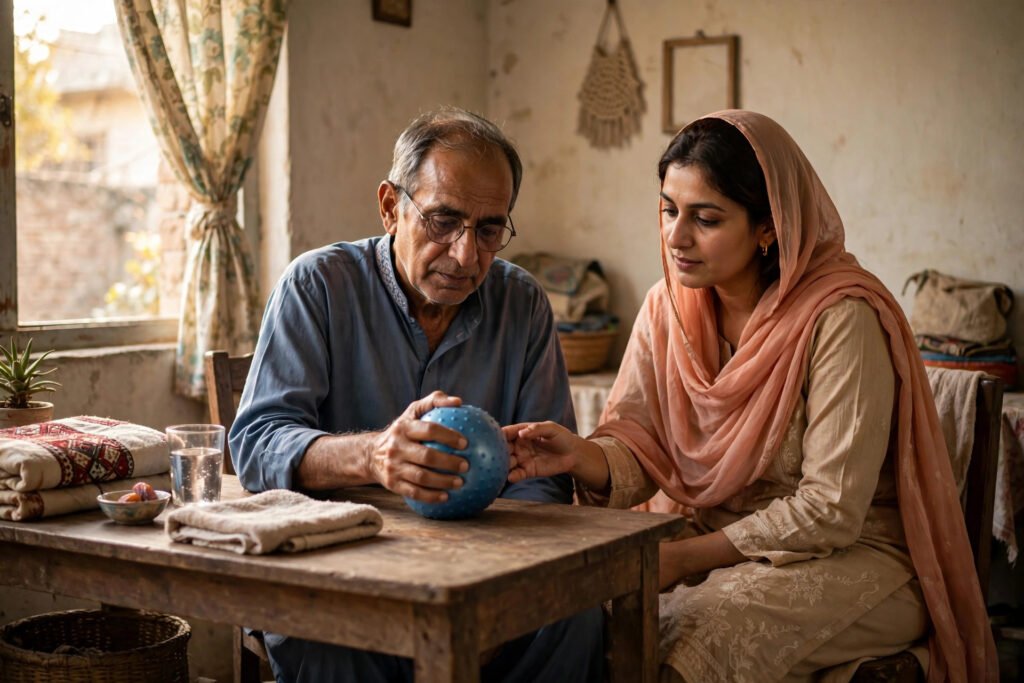
In stage 5 the patient performs more demanding actions: reaching in different directions, grasping objects of different sizes, and walking with better balance and confidence. Stiffness now appears only at the end of tiring effort. Therapy in this stage focuses on real life tasks such as dressing, buttoning a shirt, combing hair, and preparing simple food.
Stage 6: Stiffness Almost Gone and Coordination Restored
Spasticity nearly disappears in stage 6 and individual joints move almost independently of each other. Movements become faster, smoother, and better timed. The patient walks more naturally and uses the hand for finer work such as writing or holding a cup without spilling.
Stage 7: Normal Function Restored
Stage 7 means full recovery of movement: strength, speed, and coordination on the affected side match the unaffected side. Some patients complete the 7 stages of stroke recovery in full, especially after a mild stroke that received fast emergency treatment. Many others reach stages 5 or 6 and live independently with minor limitations, which families should also count as a strong and meaningful recovery.
How Many Stages Are There in Stroke Recovery and How Long Does Each Last?
There are 7 stages. Stage 1 often lasts days to weeks, while the early stages usually pass within the first few weeks. Stages 2 and 3 commonly take weeks to a few months, as stiffness rises and then voluntary control begins. Stages 4 and 5 often take months, because the patient must practise movements again and again before they feel smooth. Stages 6 and 7 can take many months, and stage 7 may take a year or more, or a patient may never fully reach it. Three things move a patient forward: an early start to therapy, therapy matched to the current stage, and daily practice at home with family support. Ask the therapy team which stage your loved one is in, and what the next small goal should be.
How Long Does Each Stage of Stroke Recovery Last?
No fixed calendar exists. Some patients pass through the early stages in a few weeks, while others spend months in a single stage. The first three months usually bring the fastest gains because the brain repairs and rewires most actively in that window. Our month by month stroke recovery timeline explains what families in Pakistan typically see at each point in the journey. Progress slows later, but it does not stop. Patients can still gain new abilities a year or more after the stroke when therapy continues.
Can a Patient Get Stuck in One Stage of Stroke Recovery?
Yes, plateaus are common, and a plateau does not always mean that recovery has ended. Progress can stall after an infection, poor sleep, low mood, uncontrolled blood pressure, or a long gap in therapy. When progress stalls for several weeks, a neurologist should review the medicines, the level of spasticity, and the therapy plan. Adjusting the programme and restarting daily practice often restart movement through the stages of stroke recovery.
What Helps a Patient Move Through the Stages Faster?
No medicine moves a patient through the 7 stages of stroke recovery on its own. Repetition drives recovery. The brain rebuilds connections when a patient practises a movement many times with correct technique, a principle specialists call neuroplasticity. Four things consistently help:
- An early start. Rehabilitation should begin as soon as the medical team confirms the patient is stable, often within the first days after the stroke.
- Stage matched therapy. Exercises must fit the current stage, because advanced drills frustrate a stage 2 patient and simple drills waste the time of a stage 5 patient. Our guide to physiotherapy for stroke patients at home shows how families in Lahore structure safe daily practice.
- Daily practice at home. Short and frequent sessions beat one long weekly session, and family involvement keeps practice consistent.
- Nutrition, sleep, and blood pressure control. The recovering brain needs fuel, rest, and stable circulation to rebuild itself.
At Quick Neuro Relief in Lahore, our team assesses each patient against the 7 stages of stroke recovery and builds the therapy plan around the current stage, then reviews progress every few weeks. You can read more about our approach at our stroke rehabilitation centre in Lahore.
Signs That Your Loved One Is Moving to the Next Stage
Small changes announce each transition within the 7 stages of stroke recovery: a finger that begins to open, stiffness that feels softer during morning exercises, a foot that lands flatter while walking, or a word that comes out more clearly during practice. Our article on the signs of improvement after stroke lists the changes worth watching for. Recording these changes in a simple notebook helps the therapy team adjust the plan and keeps family morale strong during slow weeks. The NHS stroke guide also offers a clear overview of recovery and rehabilitation for families.
Related reading: signs of improvement in paralysis and falij ka ilaj
Frequently Asked Questions
What are the 7 stages of stroke recovery called?
The framework is called the Brunnstrom stages, named after the Swedish physiotherapist Signe Brunnstrom. The stages run from stage 1, complete limpness with no voluntary movement, through to stage 7, full restoration of normal movement.
How long does it take to complete all 7 stages of stroke recovery?
Timelines vary widely. Some patients progress within a few months, while others take a year or longer, and some do not reach the final stage. The first three months usually bring the fastest change, but steady therapy keeps producing gains long after that window closes.
Can every stroke patient reach stage 7?
No, and families deserve an honest answer. Reaching stage 7 depends on the size and location of the stroke, the speed of emergency treatment, age, and other health conditions. Many patients reach stages 5 or 6, which still allows independent living with little or no help.
Which stage of stroke recovery is the hardest?
Many families find stage 3 the hardest because stiffness peaks and progress looks slow, even though voluntary control is quietly developing underneath. Stage 1 is also emotionally difficult because the patient cannot move at all and the future feels uncertain for everyone.
What should a patient practise in the early stages of stroke recovery?
In stages 1 and 2, therapists focus on positioning, passive range of motion, and protection of the shoulder and the skin. From stage 3 onward, active assisted exercises begin, and the patient practises voluntary movements inside the basic patterns first and then beyond them. A physiotherapist should supervise the programme and train the family to help safely at home.
This article provides general information only and does not replace medical advice for your specific case. If you notice sudden weakness, facial drooping, or difficulty speaking in anyone, treat it as an emergency and go to the nearest hospital immediately. Medically reviewed by the Quick Neuro Relief clinical team, Lahore.