Many stroke survivors do go back to a normal life, but full recovery depends on the stroke type, how quickly treatment started, and the quality of rehabilitation that follows. Large stroke registries report that about one third of survivors return to their previous level of function within a year, while most others regain meaningful independence with consistent support. The honest answer to the question “can a person go back to normal after a stroke” is yes for many, partial for most, and the outcome is shaped from the very first hours after the stroke.
Key Takeaways
- About one third of stroke survivors regain their previous level of function within a year of the stroke.
- The fastest gains happen in the first three to six months, but improvement can continue for years.
- Age, stroke severity, speed of treatment, and consistent rehabilitation decide how far recovery goes.
- Small, measurable milestones predict a return to normal daily life better than any single test.
- Families should start rehabilitation early and keep it consistent, even when progress feels slow.
What Does “Back to Normal” Mean After a Stroke?
“Normal” means something different to every patient and family. For most people, it means returning to the life they had before the stroke. That includes walking without help, dressing and eating independently, speaking and understanding conversation clearly, managing household tasks, returning to work or hobbies, and feeling socially confident again.
Doctors measure this with functional scales, but families measure it in real moments. The first unassisted walk to the kitchen. The first full sentence spoken without struggle. The first day back at work. When families ask “can a person go back to normal after a stroke,” they are usually asking whether these moments will come. For many survivors, they do.
How Many People Return to Normal After a Stroke?
Recovery statistics are more hopeful than most people expect. Research from large stroke registries shows roughly the following pattern:
- About one third of survivors return to their previous level of function within a year.
- Another third improve significantly but live with some lasting weakness, speech difficulty, or fatigue.
- The remaining third face moderate to severe disability and need ongoing care.
These are averages across all stroke types and ages. A younger person with a mild stroke who receives fast treatment has far better odds than these averages suggest. An older person with a severe stroke and delayed treatment faces tougher odds. Your individual answer to “can a person go back to normal after a stroke” depends on the factors covered below.
What Decides Whether Someone Gets Back to Normal?
Five factors influence the stroke recovery chances more than anything else.
1. How Severe the Stroke Was
Smaller strokes that affect a limited area of the brain leave more healthy brain tissue to take over lost functions. Survivors of mild strokes often make a full or near full recovery. Larger strokes that damage broad areas of the brain create a longer and harder recovery path. The brain scan report gives the clearest early clue about the scale of recovery ahead.
2. How Quickly Treatment Started
Every minute matters during a stroke. For ischemic strokes caused by a blood clot, clot busting treatment works best within the first few hours, and mechanical removal of the clot can help within the first day. Fast treatment limits brain damage, and limited damage means a much stronger chance of returning to normal life.
3. Age and Overall Health
Younger brains adapt and rebuild connections more readily, so younger survivors generally recover further. That said, many people in their sixties, seventies, and even eighties make remarkable recoveries. Good blood pressure control, stable blood sugar, and a healthy heart before and after the stroke all raise the brain stroke recovery chances.
4. The Quality and Consistency of Rehabilitation
This is the factor families control most. Regular physiotherapy rebuilds strength and movement. Occupational therapy retrains daily skills like dressing and cooking. Speech and language therapy restores communication. Cognitive rehabilitation sharpens memory, attention, and planning. Patients who start rehab early and keep it up recover measurably better than those who delay or stop.
5. Support at Home
Recovery does not pause between therapy sessions. Families who encourage daily practice, keep a safe and active home environment, and watch for depression give the survivor a real advantage. Emotional support is treatment in its own right after a stroke.
The Stroke Recovery Timeline: When Most People Improve
Recovery follows a pattern, and knowing the pattern helps families set realistic expectations.
The First Three Months: The Fastest Gains
The brain heals most rapidly in the first weeks and months. Swelling reduces, blood flow stabilizes, and surviving brain cells begin forming new connections. This is when the biggest improvements in movement and speech typically appear. Intensive rehabilitation during this window pays the highest dividends.
Three to Twelve Months: Steady Progress
Progress slows but does not stop. This phase is about refinement. Walking becomes steadier, hand control improves, speech gets clearer, and daily tasks become faster. Many survivors who could not have imagined returning to work at month three are considering it by month nine.
Beyond One Year: Continued Improvement
The old idea that recovery stops after a year is outdated. Studies show that focused rehabilitation can produce meaningful gains two, three, or even five years after a stroke. The pace is slower, but the brain keeps its ability to adapt. No one should give up on improvement at the one year mark.
Milestones That Show a Person Is Getting Back to Normal
Rather than waiting for one dramatic moment, watch for a sequence of milestones. Each one predicts the next:
- Sitting upright without support and standing with minimal help.
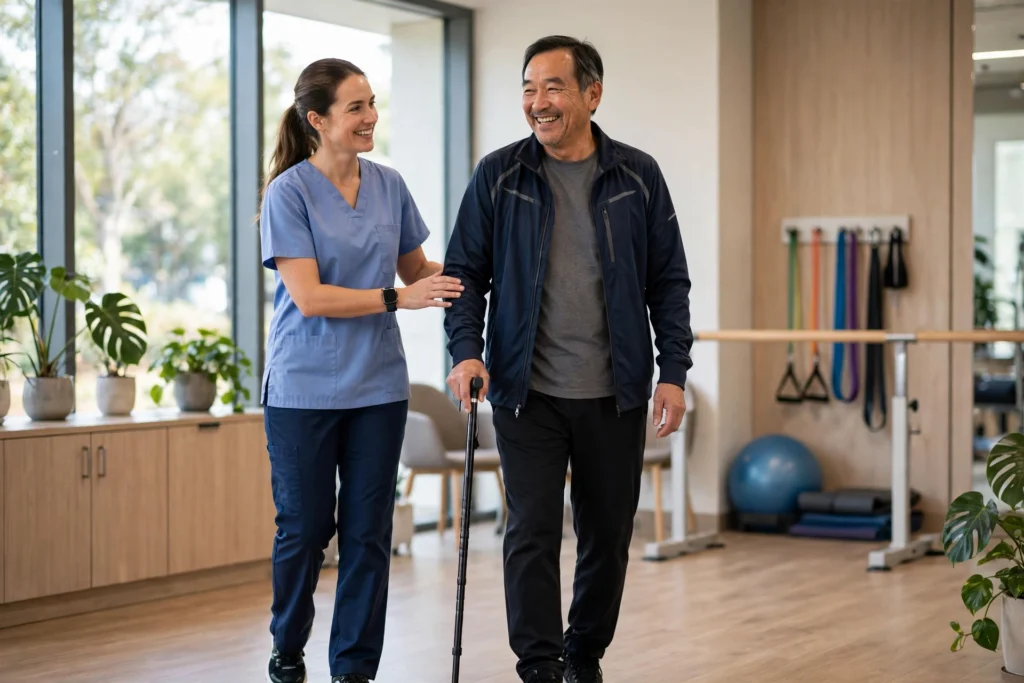
- Walking short distances, first with a walker, then with a cane, then unaided.
- Dressing, bathing, and eating without assistance.
- Speaking in full sentences and following conversations reliably.
- Handling money, using a phone, and managing simple household tasks.
- Returning to social activities, family events, and community life.
- Going back to work, driving, or independent travel.
When a survivor keeps clearing milestones like these, the answer to “can a person go back to normal after a stroke” is moving toward yes.
Rehabilitation That Gives the Best Chance of Full Recovery
Full recovery after stroke is rarely luck. It is usually the result of a planned, sustained rehabilitation program. The core elements:
- Physiotherapy: targeted exercises that rebuild strength, balance, coordination, and walking. Home based physiotherapy keeps progress going between clinic visits.
- Occupational therapy: retraining of daily skills, from buttoning a shirt to cooking a meal, plus advice on home modifications.
- Speech and language therapy: exercises for clear speech, safe swallowing, and understanding language.
- Cognitive rehabilitation: structured practice for memory, attention, and problem solving, which matter enormously for work and independence.
- Regular medical follow up: blood pressure, cholesterol, blood sugar, and medication reviews to prevent a second stroke.
Clinics like Quick Neuro Relief build these elements into a single coordinated plan so that physiotherapy, occupational therapy, and medical follow up pull in the same direction.

Returning to Work, Driving, and Daily Routines
Work is possible for many survivors, especially those with mild to moderate strokes. A gradual return works best. Part time hours, adjusted duties, and a planned schedule let the brain rebuild stamina without overload. Discuss the plan with both the treating doctor and the employer.
Driving requires a formal assessment. Stroke can affect reaction time, vision, judgment, and coordination even when walking looks fine. Most doctors advise against driving until a medical assessment clears the survivor. This usually happens after a few months of stable recovery, but the exact timing varies by person.
Daily routines come back in layers. Personal care returns first, household independence next, and full social and professional life last. Celebrate each layer instead of measuring everything against the final one. For a trusted overview of the recovery journey, the NHS stroke recovery guide is a useful reference alongside your doctor’s advice.
Habits and Risks That Slow Recovery
Certain habits actively work against a return to normal life. Avoiding them protects the gains rehabilitation builds:
- Skipping prescribed medication, especially blood pressure and blood thinning medicines.
- Smoking or heavy alcohol use, which raise the risk of a second stroke.
- Stopping rehabilitation once early progress appears.
- Ignoring depression, which affects up to one third of survivors and slows every part of recovery.
- A diet heavy in salt, fried foods, and sugary drinks.
- Overprotection by the family that removes all physical challenge from the day.
Preventing a second stroke matters as much as recovering from the first. A second stroke can erase hard won gains, so every risk factor that is controlled is recovery protected.
What Families in Pakistan Should Do Right Now
If a loved one has recently had a stroke, these steps give the best chance of a return to normal life:
- Get a clear brain scan report and ask the neurologist what functions are affected and what to expect.
- Start physiotherapy and any other prescribed therapy within days of hospital discharge, not weeks.
- Set up a simple home exercise routine and practice it daily between sessions.
- Track small milestones weekly so progress stays visible, even when it feels slow.
- Watch for warning signs of depression, another stroke, or swallowing problems, and report them promptly.
- Keep every medical follow up appointment and take medicines exactly as prescribed.
Stroke rehabilitation centres in Lahore now offer coordinated programs that combine physiotherapy, occupational therapy, and medical supervision, which saves families from organizing each service separately.
Frequently Asked Questions
Can a person go back to normal after a stroke if they are older than 70?
Yes, it is possible, though the odds and the pace differ from younger survivors. Many older patients regain independence in daily activities with consistent rehabilitation. Age slows the brain’s repair process but does not stop it.
How long does it take to recover fully after a stroke?
Most of the recovery happens within the first year, with the fastest gains in the first three to six months. Some survivors reach their best level within months, others keep improving for years. Full recovery after stroke has no fixed deadline.
Can a second stroke be prevented?
In most cases the risk can be cut sharply. Blood pressure control, prescribed blood thinning or cholesterol medicines, quitting smoking, regular activity, and a balanced diet together reduce the chance of another stroke by a large margin.
Is physiotherapy needed every day after a stroke?
Daily practice is ideal, even if formal sessions happen two or three times a week. A home exercise routine done every day keeps muscles active and teaches the brain new movement patterns faster than sessions alone.
When can a stroke patient start driving again?
Only after a medical assessment confirms it is safe, which is typically several months after the stroke. Reaction time, vision, and judgment must all test normal. Never resume driving on guesswork alone.
Medical Disclaimer: This article is for general information only and is not a substitute for professional medical advice, diagnosis, or treatment. Always consult a qualified neurologist or physician about stroke recovery. In an emergency, seek immediate medical care.
Medically reviewed by the Quick Neuro Relief clinical team, Lahore.