Cognitive rehabilitation after stroke helps survivors rebuild memory, attention, planning, and clear thinking after a stroke damages the brain networks that control those skills. It does not promise a return to exactly how thinking worked before the stroke. It rebuilds thinking through structured practice, practical strategies, and everyday routines that help the brain form new connections. This guide explains what cognitive rehabilitation after stroke involves, which thinking skills it targets, and seven proven ways it helps survivors think more clearly.
Key Takeaways
- Cognitive rehabilitation after stroke targets memory, attention, planning, language related thinking, and visual spatial skills.
- Most thinking gains come in the first three to six months, but structured practice can still help much later.
- Short, frequent practice sessions work better than long, tiring sessions.
- Routines, written plans, and memory aids matter as much as brain exercises.
- Families help most by keeping tasks simple, patient, and consistent, and by watching for low mood and poor sleep that slow thinking.
What Is Cognitive Rehabilitation After Stroke?
Cognitive rehabilitation after stroke is structured therapy that retrains thinking skills after brain injury. A therapist first assesses which thinking skills changed, how severe the change is, and how it affects daily life. The plan then combines direct practice of the weak skill with strategies that work around the weakness while recovery continues.
Cognitive rehabilitation after stroke differs from general brain games. Random puzzles may feel stimulating, but therapy targets a specific deficit with graded exercises that grow harder as skill improves. A patient with poor short term memory practises remembering names, lists, and instructions in real situations. A patient with poor attention practises staying focused in a quiet room first, then with mild background noise, then during a real conversation.
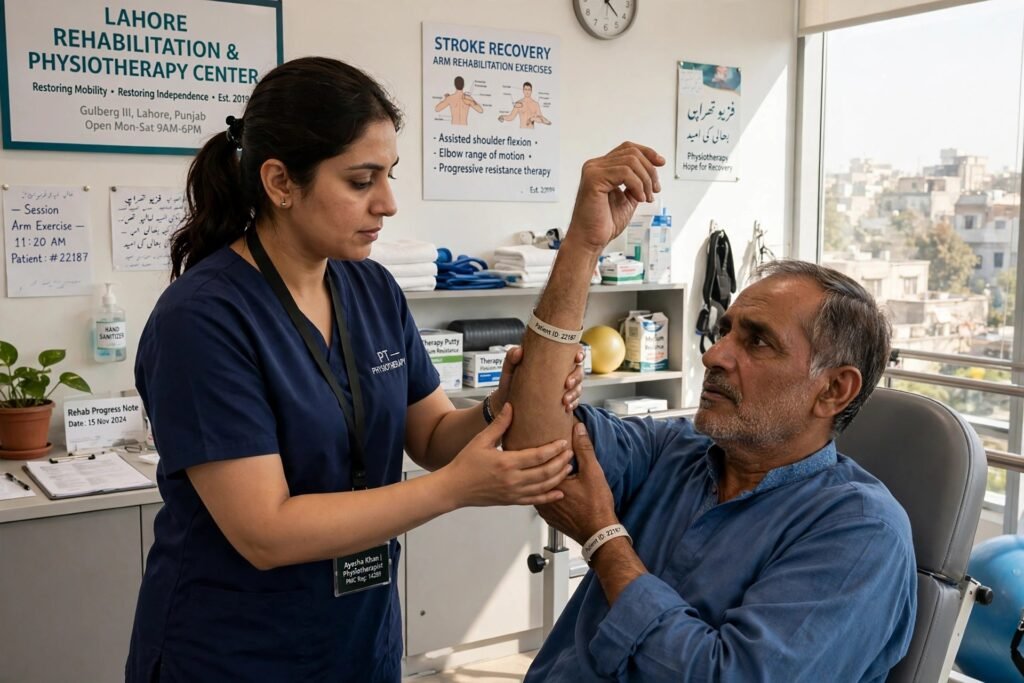
Several professionals may deliver parts of the plan: a neuropsychologist designs it, an occupational therapist applies thinking skills inside daily tasks, and a speech and language therapist helps when thinking problems affect language.
Which Thinking Skills Change After a Stroke?
Stroke affects thinking in different ways depending on where the damage sits and how large it is. Many survivors notice memory problems after stroke first, such as forgetting recent conversations, misplacing items, or repeating questions. Others notice attention problems after stroke, such as losing track during a conversation or struggling to follow a television program.
Some survivors struggle with executive function, the set of skills that plans, organises, and checks a task. Cooking a meal, managing money, or planning a shopping trip can feel overwhelming because the steps no longer fall into order. Visual spatial problems can make judging distance or noticing things on one side difficult. Naming the exact problem matters, because cognitive rehabilitation after stroke works only when it targets the right skill.
When Should Cognitive Rehabilitation After Stroke Start?
Cognitive rehabilitation after stroke should start as soon as doctors confirm the patient is medically stable and can take part in short sessions. Early assessment matters because it separates true thinking changes from problems caused by fatigue, pain, low mood, or medicine side effects. Early sessions stay short and simple, and they focus on orientation, basic attention, and one step tasks.
Starting late does not close the door. The brain keeps adapting for months and years, and many survivors improve when a fresh assessment finds a skill that earlier therapy never targeted. Act promptly, because the fastest gains usually come in the first six months.
7 Proven Ways Cognitive Rehabilitation After Stroke Rebuilds Thinking
Every plan looks different, but effective cognitive rehabilitation after stroke usually works through the same seven approaches.
Way 1: Retrain Memory With Spaced Practice
Memory retraining works best through spaced practice: recalling the same information at growing intervals. A therapist may ask a patient to remember three words, then recall them after one minute, then after five minutes. At home, practise names and shopping items the same way, repeating new information aloud and testing recall after a short break.
Way 2: Rebuild Attention Step by Step
Attention training starts simple and grows harder only when the patient succeeds. A patient may first focus on one voice in a quiet room, then follow a short story, then hold a conversation while a radio plays softly. At home, reduce distractions during important tasks, break tasks into one step at a time, and give short rest breaks before fatigue breaks focus. Avoid long sessions that end in frustration, because tired attention learns little.
Way 3: Strengthen Planning and Problem Solving
Planning therapy teaches a clear method: stop, name the goal, list the steps, do one step at a time, and check the result. A therapist may start with planning a simple snack, then a full meal, then a shopping trip, then a week of appointments. Written plans, checklists, and phone reminders support the method at home. When a step goes wrong, the therapist teaches the patient to pause and replan rather than give up.
Way 4: Use Brain Exercises After Stroke the Right Way
Brain exercises after stroke help when they match the deficit and grow harder over time. Word games help verbal memory, jigsaw puzzles help visual spatial skills, and sorting games help planning. A therapist should choose the exercises and set the level. Keep practice to short daily sessions of around twenty to thirty minutes.
Way 5: Build Memory Aids and Daily Routines
Compensation strategies often help faster than retraining alone. A large wall calendar, a notebook by the phone, labelled drawers, phone alarms for medicines, and a fixed place for keys and glasses all reduce memory load. A fixed daily routine helps even more, because doing tasks in the same order at the same time each day turns remembering into habit. Keep aids simple and consistent. One notebook used every day beats five apps that nobody opens.
Way 6: Treat Sleep, Mood, and Stroke Brain Fog Together
Stroke brain fog, that heavy sense of mental cloudiness, often comes from several causes at once: poor sleep, low mood, fatigue, and medicine effects. Cognitive rehabilitation after stroke works poorly until those causes improve. Keep a regular sleep schedule and gentle daily activity, and raise low mood with the doctor promptly, because depression after stroke directly slows memory and attention.
Way 7: Practise Thinking Inside Real Life
Thinking improves fastest when practice happens inside real tasks. Cooking practises sequencing and attention. Shopping practises memory, planning, and money skills. Conversations practise listening, word finding, and staying on topic. Families help by giving the patient real responsibility in safe tasks, allowing extra time, and praising effort and strategy, not just correct answers. Confidence grows when a patient sees thinking skills work in daily life, not only in a clinic exercise.
What Does Progress Look Like Over Time?
Cognitive rehabilitation after stroke rarely follows a straight line. Early gains often come quickly, then progress slows as tasks grow more complex. A plateau usually means the plan needs a change, not that recovery has ended. Measure progress by daily function: a patient who follows a recipe with a checklist today and cooks alone next month is progressing well.
Finding Cognitive Rehabilitation in Lahore
Families in Lahore can access cognitive rehabilitation after stroke through hospital rehabilitation departments, neurology clinics, and private therapy services. Ask the treating neurologist for a referral to a neuropsychologist or rehabilitation team. Regular sessions plus daily home practice beat occasional sessions at a famous clinic.
Frequently Asked Questions
What is cognitive therapy after stroke?
Cognitive therapy after stroke is structured therapy that retrains thinking skills such as memory, attention, planning, and problem solving after brain injury. It combines direct practice of weak skills with practical strategies such as routines, checklists, and memory aids, so the patient manages daily life better while recovery continues.
How long does cognitive rehabilitation after stroke take?
Timelines vary with stroke severity and practice intensity. Many survivors see the fastest gains in the first three to six months, but therapy can still help a year or longer when it targets a specific skill with regular practice.
Can memory return fully after a stroke?
Some survivors regain most of their memory, while others keep some gaps and manage them with strategies. Even when memory does not return fully, memory aids, routines, and retraining restore much more independence than families expect.
Do brain training apps help after a stroke?
Brain training apps can support therapy when a therapist chooses exercises that match the deficit. Apps alone rarely rebuild thinking, because they seldom transfer gains to daily tasks. Use apps as homework inside a therapist led plan.
What should families do between therapy sessions?
Families help most by building thinking practice into daily routines, keeping tasks simple, and encouraging the patient to try before helping. Use one notebook and one calendar, allow extra time, and note which strategies work.
Medical disclaimer: This article provides general information only and does not replace professional medical advice. Always consult a qualified doctor or neuropsychologist about diagnosis and treatment for a specific patient.
Medically reviewed by the Quick Neuro Relief clinical team, Lahore