Medically reviewed by the clinical team at Quick Neuro Relief & Stroke Centre, Lahore. This article is for education only and does not replace medical advice. Always consult your doctor before changing any treatment or therapy plan.
Signs of Recovery From Paralysis: The Short List
Here are the 9 early signs to watch for, in the order they usually appear. The detail for each sign follows below.
- Voluntary movement returns in the affected hand or leg
- Spasticity softens and muscles relax more easily
- Balance improves in sitting and standing
- Speech becomes clearer and words come faster
- Swallowing becomes safer and easier
- Sensation returns on the affected side
- Grip strength and fine hand control improve
- Walking distance increases with less assistance
- Thinking, attention, and memory sharpen
What Are the Signs of Improvement After Stroke?
The clearest signs of improvement after stroke include return of voluntary movement in a weak hand or leg, softer muscle tone where spasticity once dominated, steadier balance, clearer speech, safer swallowing, returning sensation, a stronger grip, longer walking distance, sharper thinking, and a brighter mood. These recovery signals usually appear in a head to toe, inside out pattern, and they almost always show up gradually rather than overnight.
If you care for a stroke survivor, this guide lists the concrete signs of improvement after stroke that therapists watch for along the stroke recovery timeline, plus a simple way to track them and a plan for what to do when progress stalls.
Key Takeaways
- The first signs of improvement after stroke often appear within days to weeks: small twitches, reduced stiffness, and clearer speech.
- Recovery follows a pattern: therapists usually see leg movement return before arm movement, and gross movement before fine control.
- Most fast gains happen in the first three months, but meaningful improvement can continue for a year or more.
- Track the signs of improvement after stroke in a weekly notebook; plateaus are normal and they respond to a change in therapy, not panic.
- If improvement stops for several weeks, ask the rehabilitation team to reassess the therapy plan rather than increasing home exercises blindly.
Why Small Signs of Improvement After Stroke Matter So Much
After a stroke, families look for big wins like walking or talking normally, but therapists look for small wins first. A toe that wiggles on command or a swallow that triggers without coughing proves the brain is rebuilding pathways, even when the patient still cannot manage daily tasks. These small stroke recovery signs also protect your mental health as a caregiver: recovery moves in bursts, not a straight line, and when you know what to watch for you stop missing real progress.
12 Signs of Improvement After Stroke Every Caregiver Should Recognize
Watch for these signs of improvement after stroke in the order the body usually recovers. Any movement on this list counts as genuine progress.
1. Voluntary Movement Returns in the Affected Hand or Leg
Purposeful movement where there was none is the most encouraging sign: a finger that curls on request, a foot that lifts half an inch. These tiny movements show the brain reconnecting with the limb, and they arrive before any useful function.
2. Spasticity Softens and Muscles Relax More Easily
When spasticity softens, the limb straightens more easily during stretching, the fist opens with less resistance, and cramping eases. Softer muscles open the door to real exercise.
3. Balance Improves in Sitting and Standing
Sitting upright without grabbing the bed rail, standing without swaying, or turning the head without losing balance. Balance usually improves before walking and sharply cuts fall risk.
4. Speech Becomes Clearer and Words Come Faster
Fewer pauses while searching for words, clearer pronunciation, and longer sentences. Clearer speech is one of the most emotional stroke improvement milestones for families, and it often advances in bursts, so a quiet week can precede a noticeably better one.
5. Swallowing Becomes Safer and Easier
Less coughing during meals, drinking thin liquids again, and faster eating with less fatigue. Safer swallowing means the throat muscles are regaining coordination, which also lowers the risk of chest infections.
6. Sensation Returns on the Affected Side
Tingling that turns into real feeling, or noticing a touch that was missed last month. Regained sensation improves movement too, because the brain needs sensory feedback to control the limb.
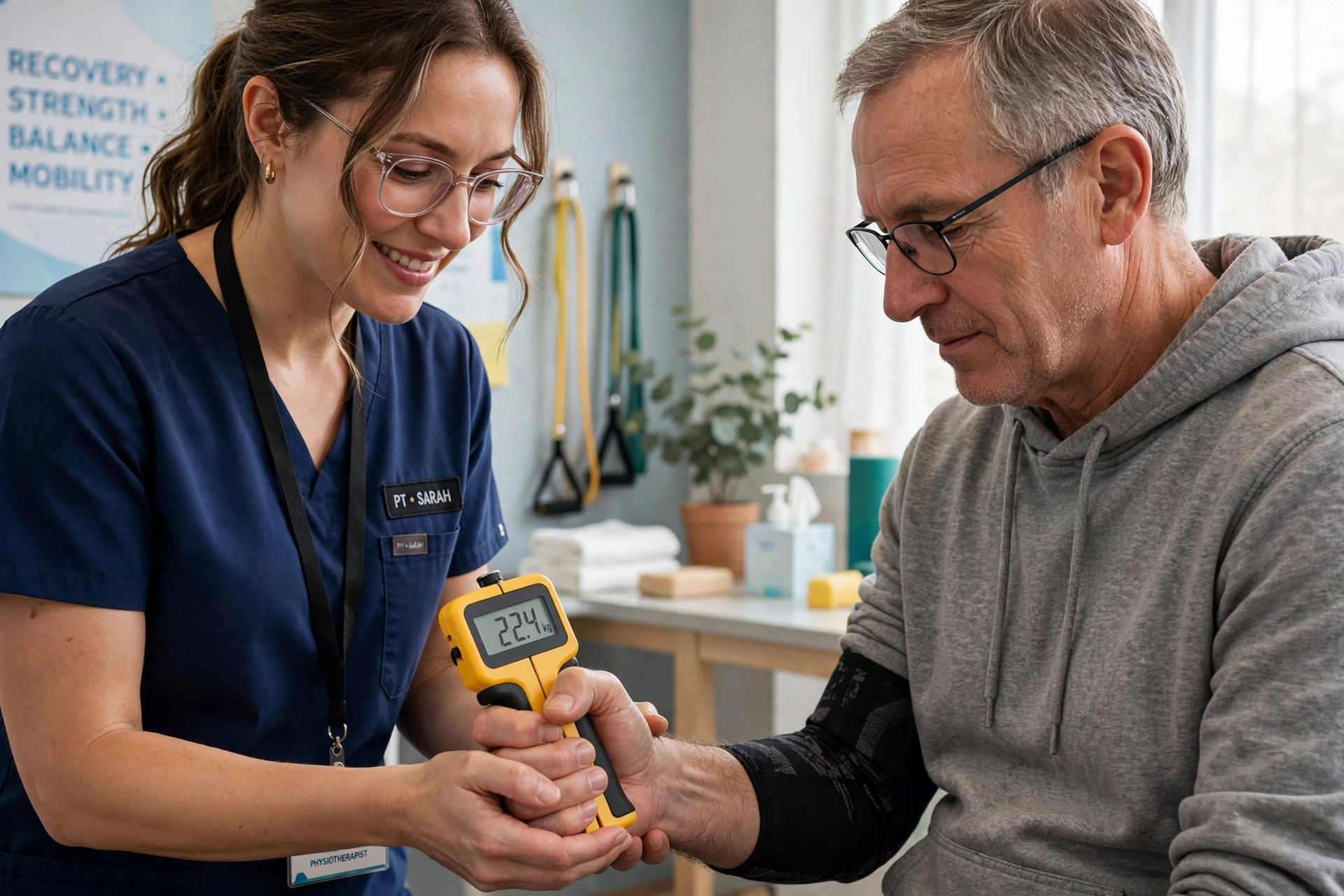
7. Grip Strength and Fine Hand Control Improve
A tighter grip on a cup, pinching a button between thumb and finger, or steadier control holding a phone. Hand gains decide whether a patient can feed and dress themselves.
8. Walking Distance Increases With Less Assistance
More steps before resting, less support from the walker, smoother steps with less foot dragging, and easier handling of doorways. Safe walking with a stick still counts as real improvement.
9. Thinking, Attention, and Memory Sharpen
Longer concentration during therapy, better recall of names, and faster responses in conversation. Families often spot these cognitive gains before the patient does.
10. Mood Lifts and Motivation Returns
A patient who initiates conversation again, shows interest in visitors, or asks about the next therapy session. This brighter mood is a genuine stroke improvement milestone, and motivation accelerates recovery because an engaged patient practices more.
11. Bladder and Bowel Control Improves
Fewer accidents, better awareness of the urge to go, and reaching the bathroom in time. This gain restores dignity as overall brain function improves.
12. Daily Tasks Get Done With Less Help
Buttoning a shirt alone, eating a full meal without help, or reaching the bathroom independently. These functional gains arrive last because they combine movement, sensation, balance, and thinking.
How to Know Stroke Recovery Is Progressing: A Simple Weekly Tracker
If you want to know how to tell whether a stroke patient is recovering, stop relying on memory and start a simple weekly log. Each Sunday, write one line for movement, speech, swallowing, mood, and daily tasks, scored 1 to 5. Even a single point of change over two or three weeks confirms that the signs of improvement after stroke are real, and it gives the therapy team data to adjust the plan. A short monthly video of walking or hand exercises, recorded the same way each time, also reveals progress that daily contact hides.
Many families also find that structured home exercises — physiotherapy for stroke patients at home — between clinic visits speed up these signs of improvement after stroke. A guided home program keeps the recovering brain stimulated every day, not just on therapy days, which is why consistent daily practice often separates patients who recover quickly from those who plateau early.
When Progress Plateaus: What to Do If Improvement Stalls
A plateau in the signs of improvement after stroke means no measurable change for three to four weeks despite regular therapy. Plateaus are normal and they are not the end of recovery; they usually mean the current routine has stopped challenging the brain, not that the brain has stopped healing.
When signs stroke recovery is progressing go quiet, ask the rehabilitation team for a formal reassessment so they can raise exercise difficulty or change techniques. Add intensity rather than just more hours, because challenging task specific practice beats longer easy sessions. Also review medicines, sleep, and mood with the doctor, since uncontrolled blood pressure, poor sleep, and depression all suppress recovery.
If home therapy has taken you as far as it can, an assessment at a dedicated stroke rehabilitation centre in Lahore can reset the plan with equipment and specialists that home care cannot match. A fresh set of expert eyes often finds the missing piece, whether that is a swallowing study, a new orthotic, or a speech therapy technique the family never tried.
Signs of Improvement After Stroke vs. Warning Signs: Know the Difference
Do not confuse recovery signals with danger signals. The signs of improvement after stroke above develop gradually and add function. Warning signs of a second stroke arrive suddenly and remove function: face drooping, sudden arm weakness, abruptly slurred speech, sudden vision loss, or sudden severe headache. Seek emergency care immediately if any appear.
Medical authorities emphasize that the signs of improvement after stroke vary widely between patients. The brain heals at its own pace, and factors like stroke severity, age, therapy intensity, and overall health shape the speed of improvement far more than any calendar prediction.
Related reading: 7 stages of stroke recovery and can paralysis be cured
Frequently Asked Questions
What are the first signs of improvement after stroke?
The earliest signs are small: finger twitches on command, softer stiffness, less coughing while swallowing, clearer single words, and steadier sitting. They usually appear in the first days to weeks as the brain rebuilds pathways.
How long after a stroke can improvement continue?
The fastest gains happen in the first three months, but these signs of improvement after stroke can continue for a year or longer. Patients who keep practicing challenging exercises keep gaining well beyond the first year.
How do I know if stroke recovery is progressing or stalled?
Track one measurable detail per week, such as walking distance or speech clarity. If nothing changes for three to four weeks despite regular therapy, the recovery has plateaued and the plan needs reassessment.
Is lack of improvement in the first month normal?
Yes. Some patients show little visible change in the first weeks while swelling settles. Consistent therapy during this period still matters because it prepares the brain for the gains that follow.
Can improvement restart after a plateau?
Yes. Plateaus respond well to changed therapy: harder exercises, new techniques, and treated sleep or mood problems. Many patients make their biggest gains right after a plateau breaks.
What should a caregiver do when a stroke patient stops improving?
Book a reassessment with the rehabilitation team and bring your weekly tracker. Ask about more intensive therapy methods and check with the doctor for hidden issues like poor sleep or uncontrolled blood pressure.
Medical Disclaimer
This article is for educational purposes only and is not medical advice. Stroke recovery varies for every patient. Always follow the guidance of your treating doctor and rehabilitation team, and seek immediate medical care if new or sudden symptoms appear.