Medically reviewed by the clinical team at Quick Neuro Relief & Stroke Centre, Lahore. This article is for education only and is not medical advice. Speak to your doctor about your own condition.
Is Paralysis 100% Curable? An Honest Answer From Stroke Specialists
Paralysis is not 100% curable in every case, but significant recovery is possible for many patients, especially with early treatment and consistent rehabilitation. Whether paralysis can be cured depends on the cause, the extent of nerve or brain damage, how quickly treatment begins, and how committed the patient is to therapy.
At our centre in Lahore, we have treated thousands of paralysis cases over 7 years. Some patients walk out independently. Others regain partial movement that transforms their daily life. This article explains what recovery really looks like, what improves your chances, and what to do right now if you or a loved one faces paralysis.
Table of Contents
Key Takeaways
- No honest doctor promises a 100% cure for all paralysis, but many patients recover substantial function
- Stroke caused paralysis has the best recovery outlook when rehab starts within days
- The first 3 to 6 months bring the fastest gains; improvement can continue for years
- Daily physiotherapy, not occasional sessions, drives recovery
- Age, overall health, and family support strongly influence outcomes
Can Paralysis Be Cured: Is Paralysis 100% Curable?
When families ask us “can paralysis be cured” or “is paralysis 100% curable,” we answer with the factors that actually decide the outcome. Paralysis means loss of muscle function in part of the body. It happens when something disrupts the signals between the brain and muscles: a stroke, spinal injury, nerve damage, or conditions like Bell’s palsy.
Five factors shape whether paralysis can be cured in a given case:
- Cause. Stroke related paralysis often improves as the brain heals and rewires. Complete spinal cord injuries recover less. Bell’s palsy (facial paralysis) resolves fully in most patients within months.
- Severity. Partial weakness (paresis) recovers better than complete loss of movement (plegia).
- Speed of treatment. Stroke patients who reach care within hours and start rehab within days recover far better than those who wait weeks.
- Rehabilitation intensity. Patients who do daily guided therapy outperform those who attend sporadically. This is the factor families control most.
- Overall health. Younger patients and those without uncontrolled diabetes or heart disease tend to recover faster.
Can Paralysis Be Cured Completely?
A full cure means the affected part works exactly as it did before. Functional independence means a person can walk, dress, eat and manage daily life safely, even if some weakness remains. Many patients reach functional independence even when a full cure does not happen. Therapists set clear goals around daily tasks, not only around perfect movement, so families can see real progress week by week.
Can a Paralysed Person Walk Again?
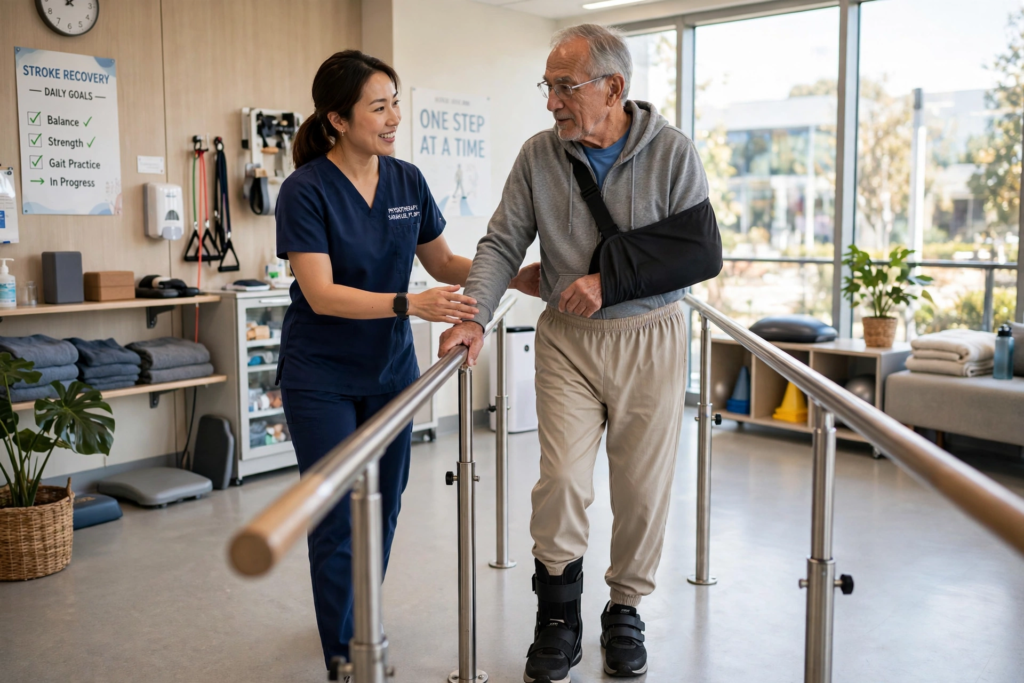
Yes, many paralysed people walk again, but no honest specialist can promise this for every patient. Walking returns most often after stroke related weakness, when treatment starts early and therapy stays regular. Some people walk with a stick or a frame at first. Others walk independently after months of guided practice. A smaller group does not regain walking, yet still gains sitting balance, transfers and daily independence.
Three limits shape the answer. Timing matters: therapy in the first weeks protects joints and builds strength while the brain relearns movement. Stroke severity matters: partial weakness usually responds better than complete loss of movement. Therapy dose matters: daily guided sessions plus home practice beat occasional clinic visits. In the first weeks, families should focus on safe sitting, standing practice and short, regular walks with support, not on pushing through pain or fatigue.
Related reading: 7 stages of stroke recovery
Also read: signs of improvement in paralysis
Also read: diet after stroke
Paralysis Recovery Chances by Cause
To judge whether paralysis is 100% curable in your case, start with the cause. Different conditions carry very different outlooks.
Stroke Caused Paralysis
Stroke is the most common cause of paralysis we treat, and it carries genuine hope. The brain can rewire itself around damaged areas, a process called neuroplasticity. With structured physiotherapy, most stroke survivors regain meaningful movement. Many walk again. Many regain arm and hand use. Recovery is fastest in the first 3 to 6 months, but we regularly see patients improve 12 to 18 months after their stroke when therapy stays consistent.
Bell’s Palsy (Facial Paralysis)
Bell’s palsy has excellent paralysis recovery chances. Around 7 in 10 patients recover completely within 3 to 6 months, often with physiotherapy and facial exercises speeding the process. Early treatment with prescribed medication plus facial rehabilitation gives the best results.
Spinal Cord Injury
Outcomes here vary widely. Incomplete injuries, where some signal still passes through the cord, can improve substantially with rehab. Complete injuries recover less, though therapy still prevents complications and builds independence with assistive techniques.
Guillain Barre Syndrome and Nerve Injuries
Many peripheral nerve conditions improve as nerves slowly regenerate, roughly 1 millimeter per day. Recovery takes months, but steady physiotherapy during that window preserves muscle and joint function until nerves reconnect.
Paralysis Treatment: What Actually Works
Effective paralysis treatment has two phases: medical care for the underlying cause, then rehabilitation to restore function. For stroke, emergency hospital care comes first. Then the real work begins. Understanding these two phases is the key to answering “is paralysis 100% curable” for any patient.
Physiotherapy rebuilds strength, balance, and walking. Therapists use guided exercises, gait training, and resistance work, progressing from bed exercises to standing to walking.
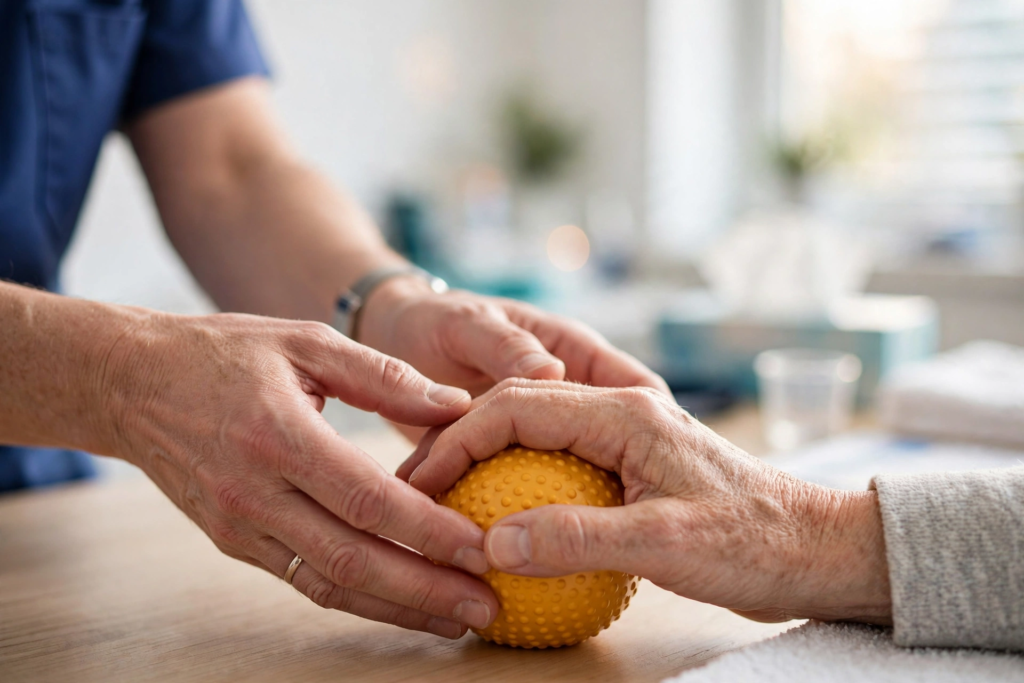
Occupational therapy retrains daily skills: dressing, eating, writing, bathing. These small victories restore independence and dignity.
Speech and swallowing therapy helps when paralysis affects the face, tongue, or throat, which is common after stroke.
Electrical stimulation can activate muscles that the brain cannot yet reach on its own, keeping them alive while neural pathways rebuild.
No single tablet cures paralysis, which is why the question “is paralysis 100% curable” has no universal yes. Anyone promising a guaranteed cure through one injection or pill is selling false hope. Real paralysis treatment is a structured program over months, tailored to the patient.
Stroke Paralysis Recovery: A Realistic Timeline
Families always ask how long stroke paralysis recovery takes, and whether paralysis is 100% curable within that time. Here is the honest timeline we share in our clinic:
- Days 1 to 7: Hospital care stabilizes the patient. Gentle movement prevents stiffness and bedsores.
- Weeks 2 to 4: Active rehab begins. Sitting balance, standing practice, and basic transfers.
- Months 1 to 3: The fastest gains. Many patients take first assisted steps here.
- Months 3 to 6: Steady progress in walking quality, arm use, and daily independence.
- Months 6 to 12: Smaller but meaningful gains. Focus shifts to real life skills.
- Beyond a year: Improvement slows but does not stop. Continued exercise protects every gain.
What Families Can Do Right Now
If your loved one has just become paralyzed and you’re wondering “is paralysis 100% curable,” act on these steps today:
- Get them to a hospital immediately if the cause is unknown or sudden. Every hour matters for stroke.
- Ask the doctor for a physiotherapy referral before discharge, not weeks later.
- Start rehab within days of medical stability. Early movement prevents permanent stiffness.
- Do the home exercises the therapist prescribes, every single day. Clinic sessions alone are not enough.
- Keep their spirits up. Depression slows recovery measurably; engagement speeds it.
Warning Signs: Avoid False Promises
Desperate families attract exploitation. Be cautious of anyone who guarantees that paralysis is 100% curable, demands large advance payments for secret treatments, discourages physiotherapy in favor of one miracle product, or refuses to explain their method. Legitimate paralysis treatment is transparent, gradual, and always includes rehabilitation.
Frequently Asked Questions
Is paralysis 100% curable?
No ethical doctor claims paralysis is 100% curable in all cases. However, many patients achieve major recovery, and some recover fully, depending on the cause and treatment. Bell’s palsy, for example, resolves completely in most patients. Stroke paralysis improves substantially with dedicated rehabilitation.
Can paralysis be cured after many years?
Improvement is still possible even years later, though gains come slower than in the first months. We have seen patients improve 2 to 3 years after their stroke once they restarted consistent therapy. It is never too late to begin, but earlier is always better.
Which treatment is best for paralysis?
There is no single best treatment. The proven approach combines medical care for the cause with intensive physiotherapy, occupational therapy, and speech therapy as needed. Consistency beats intensity: daily moderate therapy outperforms occasional heroic sessions.
How long does paralysis take to heal?
It depends on the cause. Bell’s palsy often resolves in 3 to 6 months. Stroke recovery shows fastest gains in 3 to 6 months with continued improvement up to a year and beyond. Nerve injuries heal at about 1 millimeter per day. Your treating team can give a personal estimate after assessment.
Does massage help paralysis?
Massage improves circulation and reduces stiffness, which supports recovery, but it does not cure paralysis on its own. Use it as a complement to active physiotherapy, not a replacement.
So, is paralysis 100% curable? Not in every case, but recovery far beyond what most families expect is absolutely achievable with the right care at the right time.
Quick Neuro Relief & Stroke Centre has treated paralysis and stroke patients in Lahore for 7 years. If you need guidance, our clinical team answers questions every day. This article educates; it does not replace your doctor’s advice. Still asking “is paralysis 100% curable”? Our specialists can assess your specific case.