Table of Contents
Medically reviewed by the clinical team at Quick Neuro Relief & Stroke Centre, Lahore.
Brain Stroke Treatment in Pakistan: Options, Costs and Where to Go
Brain stroke treatment in Pakistan starts in the emergency room, where a brain scan decides whether clot dissolving medicine, surgery, or supportive care fits the case. After that come hospital recovery and rehabilitation: physiotherapy, speech therapy, and medication that prevents another stroke. Acting fast matters more than anything else, because clot dissolving treatment only works within the first few hours after symptoms begin.
Key Takeaways
- Brain stroke treatment in Pakistan begins with an emergency room brain scan that tells doctors which type of stroke the patient has.
- Clot dissolving medicine only helps within the first few hours, so reaching a stroke hospital in Pakistan fast decides the outcome.
- Surgery applies mainly to bleeding strokes; most blocked artery strokes receive medicine plus close monitoring.
- Stroke treatment cost in Pakistan ranges from low cost public care to expensive private care, with clot treatment the largest single expense.
- Every major city has hospitals with CT scans and neurology departments, but dedicated stroke units are still few.
- Brain stroke recovery continues at home with physiotherapy, speech therapy, and daily medicines that prevent another stroke.
Brain Stroke Causes
A brain stroke happens when blood flow to part of the brain stops or when a blood vessel in the brain bursts. A clot causes the most common type: it blocks an artery and starves brain cells of oxygen. A bleed causes the second type: blood leaks into brain tissue and presses on nearby cells. High blood pressure raises the risk of both types, because it damages artery walls over time and can trigger a bleed. Other risks include diabetes, smoking, high cholesterol and an irregular heartbeat. Doctors treat the cause first, then work on recovery.
What Brain Stroke Treatment Involves
Brain stroke treatment in Pakistan follows the same medical steps used worldwide. The goal in the first hours is to save as much brain tissue as possible. After that, the goal shifts to preventing another stroke and rebuilding function.
The emergency phase
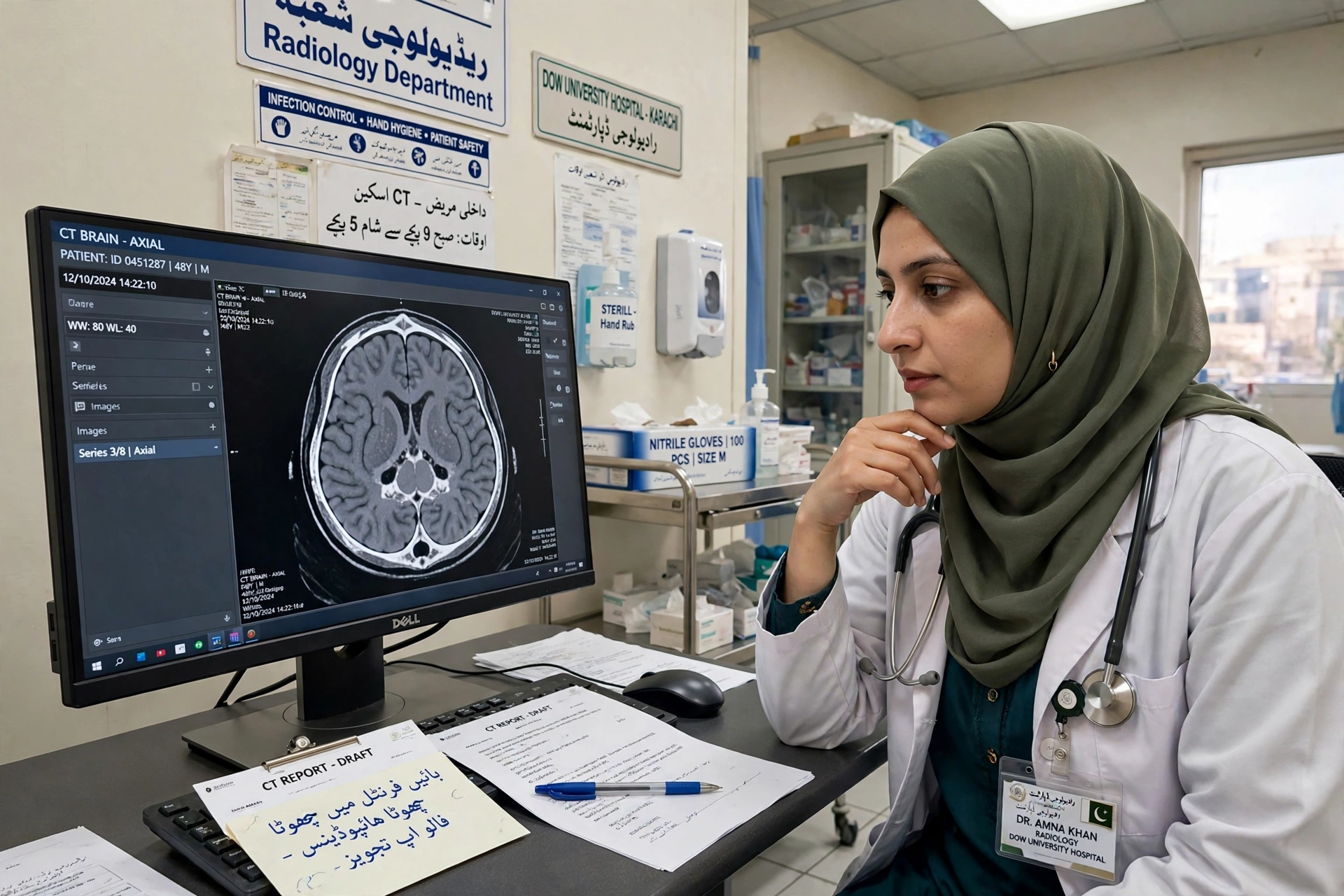
Doctors first confirm the stroke type with a CT scan of the brain. An ischemic stroke means a blocked artery; a hemorrhagic stroke means bleeding inside the brain. The scan decides everything that follows.
Clot dissolving and clot removal treatment
For ischemic stroke, doctors may give clot dissolving medicine through a drip. It only helps if doctors start it within about four and a half hours of the first symptoms. A few advanced hospitals in Pakistan also offer mechanical thrombectomy, in which a specialist threads a catheter through an artery and pulls the clot out directly. Few centres offer it, at far higher cost.
Brain Stroke Medicine: What Doctors Prescribe and Why
Doctors prescribe brain stroke medicines to stop clots, prevent another stroke and control blood pressure. In the first hours after a clot stroke, doctors may use a clot busting medicine that only works inside a short treatment window, so speed matters. After that, many patients take blood thinners or antiplatelet medicines to stop new clots from forming. Doctors also prescribe medicines to control blood pressure, cholesterol and blood sugar, because these lower the risk of a second stroke. Never start, stop or change a stroke medicine on your own. See your doctor about your own medicines and ask what each one does and why you need it.
Surgery for brain stroke
Hemorrhagic strokes sometimes need surgery to relieve pressure inside the skull or repair a bleeding vessel. Surgery also treats dangerous swelling after very large strokes. Neurosurgeons in major Pakistani cities perform these operations regularly, and good intensive care afterwards matters equally.
Early rehabilitation in the hospital
Rehabilitation starts in the hospital, often within the first day or two. Physiotherapists move the weak limbs to keep joints flexible, speech therapists check swallowing safety, and doctors begin medicines for blood pressure and blood thinning. Ask the hospital team when therapy begins rather than waiting for discharge.
Brain Stroke Treatment in Pakistan: Key Options
Most large hospitals in Pakistan offer the core elements of brain stroke treatment in Pakistan: emergency assessment, CT scanning, intensive care, and neurology consultation. Many private hospitals and some public teaching hospitals offer clot dissolving medicine. After discharge, families can choose hospital physiotherapy departments, dedicated rehabilitation centres, or home physiotherapy services.
When families search for brain stroke ka ilaj, they sometimes come across traditional or unverified remedies. Modern medicine gives the best chance of survival and recovery. The right brain stroke ka ilaj is the full medical pathway: emergency care, correct medicines, and steady rehabilitation.
Stroke Treatment Cost in Pakistan: What Families Should Expect
Stroke treatment cost in Pakistan varies widely between public and private hospitals. Public teaching hospitals often charge little for emergency care and admission, though families usually buy medicines themselves. Private hospitals charge far more: an emergency visit with a brain scan typically runs into the tens of thousands of rupees, plus a large daily intensive care charge. The single biggest expense in brain stroke treatment in Pakistan is often the clot dissolving medicine, which can cost several hundred thousand rupees on its own.
Rehabilitation is the longer expense, since physiotherapy sessions usually cost a few thousand rupees each in private clinics and most patients need several sessions a week for months. Ask for a written cost estimate at admission and check insurance, Sehat Card coverage, or charity fund options.
Where to Get Stroke Treatment in Pakistan
A good hospital for brain stroke treatment in Pakistan is one that can scan the brain immediately, has a neurologist available round the clock, and runs an intensive care unit. Lahore, Karachi, and Islamabad have the largest number of such hospitals, both public teaching hospitals and private ones. Other large cities such as Faisalabad, Multan, Rawalpindi, Peshawar, and Hyderabad have neurology departments and CT scanning, though dedicated stroke units remain rare there.
Before an emergency, identify the nearest stroke ready hospital and save its emergency number. In a real emergency, go straight to a hospital with scanning and neurology instead of a small clinic that will only refer the patient onward.
The Golden Hours: Why Speed Decides the Outcome
Doctors call the first hours after a stroke the golden hours, because brain tissue dies quickly once its blood supply stops. Clot dissolving medicine loses power with every passing hour, and after the treatment window closes, doctors can only offer supportive care. This is the most important fact about brain stroke treatment in Pakistan: the hospital matters less than the speed of arrival.
Families should learn the FAST warning signs. Face drooping on one side, Arm weakness when raising both arms, Speech that sounds slurred or strange, and Time to call emergency services at once. Do not wait to see whether symptoms improve, and do not give the person food or water, because swallowing may be unsafe.
What Families in Lahore and Punjab Should Do
Lahore hosts several hospitals with neurology departments and round the clock CT scanning, a real advantage for local families. Save the emergency numbers of two nearby hospitals in every family phone, and keep a small file of medical history for elderly members.
Arrange rehabilitation before discharge rather than after. Many families in Punjab delay physiotherapy for weeks while searching for options, and those lost weeks slow brain stroke recovery. Centres such as Quick Neuro Relief & Stroke Centre in Lahore combine neurological assessment with structured rehabilitation, helping families move smoothly from hospital to home.
Brain Stroke Recovery After Hospital Treatment
After brain stroke treatment in Pakistan, recovery usually continues for six months to a year, with the fastest gains in the first three months. Most patients need physiotherapy several times a week at first, speech therapy if speaking or swallowing is affected, and daily medicines for life.
Families play the largest role in recovery. Encourage the patient to use the weak side, keep therapy appointments regular, and watch for warning signs of another stroke. Regular follow up visits let the neurologist adjust medicines and track progress. With steady rehabilitation, many patients regain the ability to walk, speak, and manage daily life, even after a severe stroke.
Brain Stroke Treatment in Urdu (Short Summary)
Brain stroke ka ilaj foran shuru hona chahiye. Pehle dimagh ka scan hota hai taake doctor ye jaan sake ke stroke clot ki wajah se hua ya khoon behne ki wajah se. Clot wale stroke mein jaldi dawai di jati hai, aur khoon behne wale stroke mein kabhi surgery ki zaroorat hoti hai. Hospital ke baad physiotherapy aur dawaiyan recovery mein madad karti hain. Agar falij ki alamat nazar aaye to foran hospital jayein, der karna nuqsan deh ho sakta hai.
Related reading: falij ka ilaj, 7 stages of stroke recovery and stroke rehabilitation centre in Lahore
Frequently Asked Questions About Brain Stroke Treatment in Pakistan
What is the first treatment given for brain stroke in Pakistan?
The first step in brain stroke treatment in Pakistan is always a CT brain scan to identify the stroke type. For blocked artery strokes within the treatment window, doctors give clot dissolving medicine. For bleeding strokes, doctors control blood pressure and consider surgery.
How much does stroke treatment cost in Pakistan?
Stroke treatment cost in Pakistan ranges from low cost public hospital care to several hundred thousand rupees or more at private hospitals, depending on intensive care days, medicines, and whether clot treatment or surgery is needed. Rehabilitation adds an ongoing cost of a few thousand rupees per physiotherapy session.
Can brain stroke be cured completely?
Some patients recover fully, especially with fast treatment of a mild stroke, but many keep some weakness or speech difficulty. Doctors focus on maximum recovery rather than promising a complete cure. Early treatment and steady rehab give the best result.
Where is the best place for brain stroke treatment in Pakistan?
Lahore, Karachi, and Islamabad have the most hospitals equipped for emergency stroke care. In an emergency, choose the nearest hospital with a CT scanner, a neurologist, and an intensive care unit, because arriving fast matters more than travelling far.
What does brain stroke ka ilaj involve?
Brain stroke ka ilaj means the complete medical pathway: emergency brain scanning, clot dissolving medicine or surgery where suitable, hospital recovery, and months of rehabilitation. Families should rely on this medical pathway rather than unverified traditional remedies.
How long does brain stroke recovery take?
Brain stroke recovery typically continues for six months to a year, with fastest improvement in the first three months. Progress depends on stroke size, treatment speed, patient age, and rehab regularity.
This article is for information only and does not replace medical advice. Please consult your own doctor before making treatment decisions.