You can help a stroke patient at home by keeping their environment safe, supporting their daily exercises, encouraging independence and watching closely for warning signs. The first months after hospital discharge matter most because the brain relearns movement and speech fastest during this early recovery period. This guide gives you nine practical steps that families in Lahore and across Pakistan can follow together with their medical team when learning how to help a stroke patient at home.
Key Takeaways
- Make the home safe: clear walkways, install grab bars and improve lighting before the patient returns.
- Support daily rehab exercises, but let the patient do as much as they can manage on their own.
- Help with swallowing, meals and medicines on a fixed schedule.
- Watch for mood changes, depression and frustration, and celebrate small wins.
- Learn the FAST warning signs and call emergency help at once if symptoms return.
1. Make the Home Safe Before Anything Else
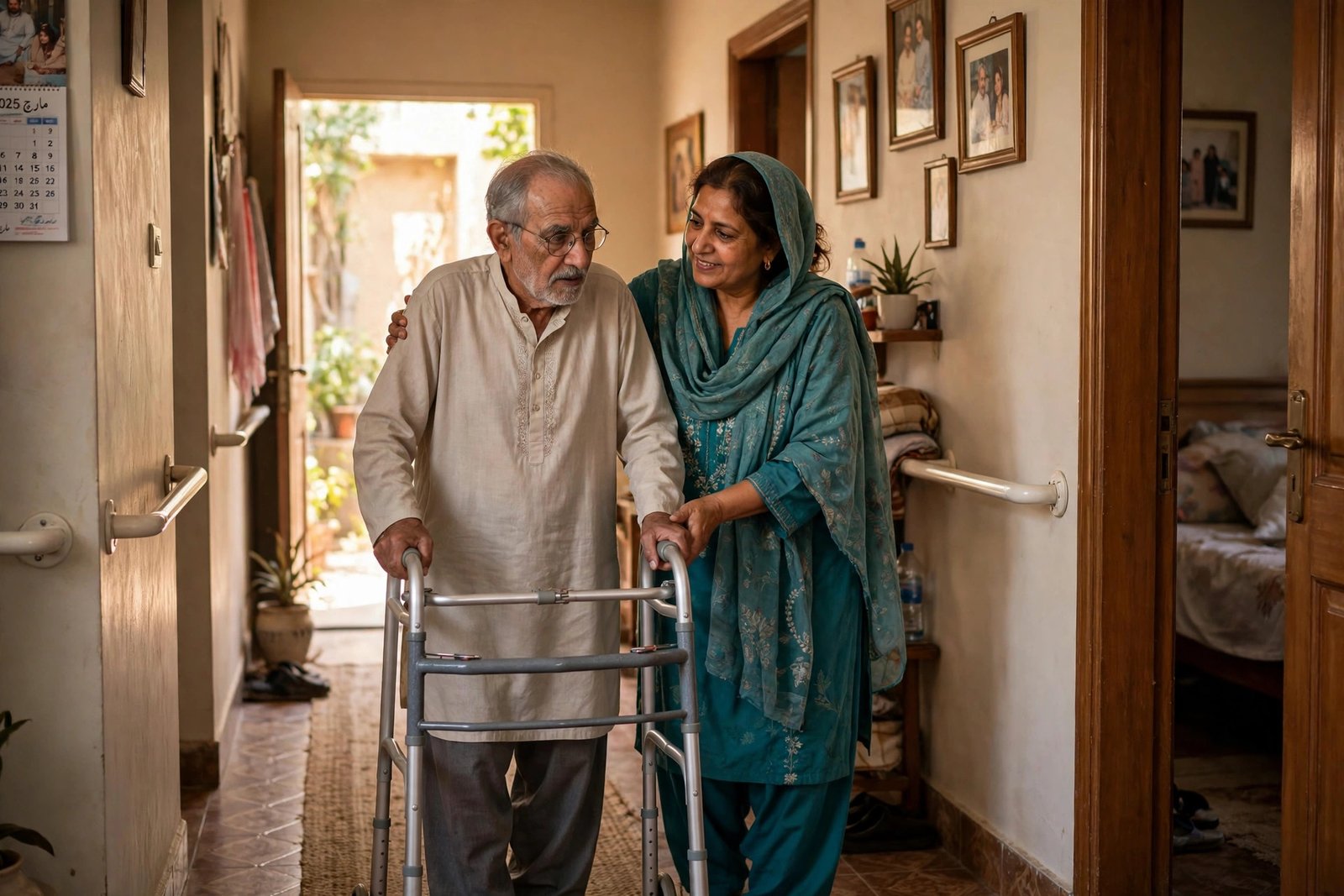
Safety comes first when you are learning how to help a stroke patient at home. A person who has weakness on one side, poor balance or vision problems can fall easily, and a fall can undo months of progress. Walk through every room the patient will use and remove loose rugs, trailing wires and clutter from walkways.
Install grab bars in the bathroom near the toilet and inside the shower area. Place a non slip mat in the shower and a sturdy chair or shower stool if standing is difficult. Improve lighting in hallways and staircases, and keep a lamp within reach of the bed. If the patient uses a walker or wheelchair, widen the path between furniture so they can move without squeezing past obstacles.
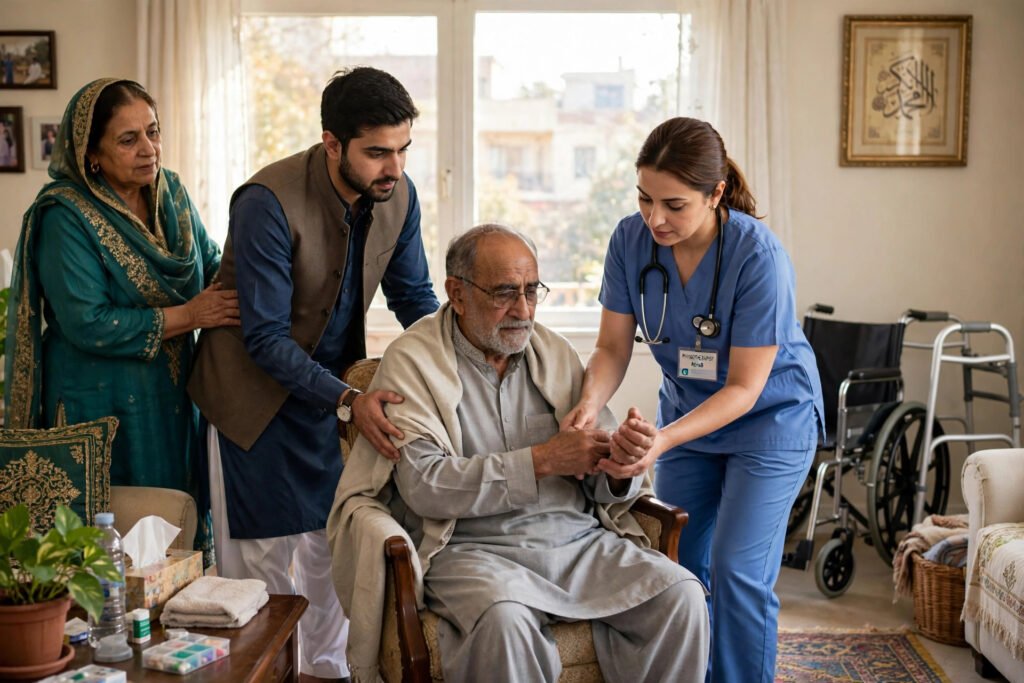
Ask your physiotherapist to visit the home once if possible. A therapist can spot risks you might miss and give personalised guidance on how to help a stroke patient at home without creating new hazards.
2. Learn How to Help a Stroke Patient at Home With Daily Exercises
Rehabilitation works only when exercises happen every day, not only during clinic visits. Your job is to make sure the home exercise plan continues. Sit with the patient while they do their exercises, count repetitions with them and gently remind them when they skip a session.
Typical home exercises include shoulder and arm movements, seated leg lifts, ankle rotations and standing balance practice near a wall or counter. Never force a stiff limb to move, and stop any exercise that causes sharp pain or extreme fatigue. Write down what the patient completes each day so you can share honest progress notes with the therapist at the next visit.
For a full exercise routine, read our guide on physiotherapy for stroke patients at home in Lahore, which explains the most common movements step by step.
3. Encourage Independence in Everyday Tasks
One important lesson in how to help a stroke patient at home is that care does not mean doing everything for them. Recovery grows fastest when the patient practices real tasks. Let them dress themselves even if it takes longer, let them feed themselves with the stronger hand, and let them brush their teeth without help.
Break tasks into small steps and stay nearby for safety. Use adaptive tools such as button hooks, elastic shoelaces and one handed cutting boards to reduce frustration. Praise effort rather than speed. When a patient feels capable, their motivation for therapy rises and depression risk falls.
4. Manage Swallowing, Eating and Medicines Carefully
Many stroke patients develop swallowing problems. Feed the patient sitting fully upright, offer small bites and avoid thin liquids such as plain water if the doctor has advised thickened fluids. Watch for coughing, choking or a wet sounding voice during meals, and report these signs to the doctor because they can signal aspiration.
Serve brain friendly meals with vegetables, lentils, lean protein and whole grains, and limit salt, fried food and sugary drinks. Families learning how to help a stroke patient at home often find that a simple weekly menu plan makes mealtimes far less stressful. Our article on diet after stroke lists foods that support recovery and foods to avoid.
Set a fixed daily schedule for medicines and use a pill organizer or phone alarms so no dose is missed. Blood pressure and blood sugar medicines prevent a second stroke, so never skip them without the doctor’s permission.
5. Support Speech and Communication
Stroke can damage speech or the ability to understand words. Speak slowly, use short sentences and give the patient time to answer. Ask yes or no questions when conversation feels hard, and keep a notepad, picture cards or a simple communication app nearby.
When you are learning how to help a stroke patient at home, patience in conversation matters as much as any exercise. Read aloud together, name objects around the room and sing familiar songs, because rhythm and music often unlock speech when normal conversation stalls. Celebrate every new word. If a speech therapist gave homework, treat it with the same seriousness as physical exercises.
6. Watch Mood, Sleep and Mental Health
Depression affects nearly one in three stroke survivors. Watch for loss of appetite, crying, withdrawal from family, disturbed sleep or statements of hopelessness. These are medical symptoms, not ingratitude, and they respond to treatment.
Part of how to help a stroke patient at home is keeping a gentle daily routine with fixed sleep and meal times, some sunlight exposure and short social contact every day. Avoid long hours of sitting alone in front of a screen. If low mood lasts more than two weeks, ask the doctor for help. Stroke caregiver tips from experienced families agree on one point: the caregiver’s own rest matters too, so share duties among family members and accept help when neighbours or relatives offer it.
7. Track Progress and Celebrate Small Wins
Recovery after stroke is slow, and families sometimes miss real improvement because it arrives in small steps. Keep a simple weekly log: can the patient sit longer, walk further, speak more clearly or eat with less help than last week?
Knowing how to help a stroke patient at home also means recognising progress, so learn what recovery looks like in our guide on signs of improvement after stroke, and report it accurately to the medical team. Share good news with the patient. Small victories rebuild confidence, and confidence drives more effort.
8. Prevent a Second Stroke
The risk of another stroke is highest in the first year, so prevention is a central part of how to help a stroke patient at home. Make sure blood pressure stays controlled, diabetes medicines are taken on time and smoking stops completely. Keep follow up appointments with the neurologist and do not cancel them just because the patient feels better. The NHS stroke recovery guide explains these prevention and rehabilitation steps in more detail.
Learn the FAST signs: Face drooping, Arm weakness, Speech difficulty, Time to call emergency help. If any of these appear suddenly, call for an ambulance immediately. Quick treatment can save brain tissue and limit damage.
9. Know When to Ask Professionals for Help
Home care has limits. Contact the doctor promptly if the patient develops new weakness, sudden confusion, severe headache, fever with a wound, repeated falls or refusal to eat. If you feel overwhelmed, ask the clinic about home nursing visits, day rehabilitation programs or caregiver support groups.
A professional stroke rehabilitation centre in Lahore can take over structured therapy while you continue the daily support at home. A professional team can also coach you on how to help a stroke patient at home between appointments. Getting expert help is not failure. It is one of the smartest ways to help stroke patients recover at home safely.
Frequently Asked Questions
How long does it take to help a stroke patient recover at home?
Most visible recovery happens in the first three to six months, but improvement can continue for a year or longer. Every family learning how to help a stroke patient at home should expect a different pace.
What should a caregiver do every day for a stroke patient?
A daily routine for caring for a stroke patient at home includes supervising rehab exercises, helping with meals and medicines, encouraging self care tasks, keeping the home safe and providing companionship. Consistency matters more than doing extra on some days and nothing on others.
Can a stroke patient be left alone at home?
It depends on the severity. Patients with balance problems, swallowing difficulty, confusion or a high fall risk should not stay alone. Ask the treating doctor for a clear answer based on the patient’s condition, and arrange family shifts or a home attendant if needed.
How do I handle a stroke patient who refuses therapy?
Refusal usually comes from frustration, pain or depression rather than laziness. Shorten sessions, offer choices, link exercises to goals the patient cares about and reward effort. Discuss persistent refusal with the therapist, who can adjust both the plan and your approach to how to help a stroke patient at home so sessions feel less like a battle.
What equipment helps stroke patient care at home?
Useful items include a walker or cane, grab bars, a shower stool, a raised toilet seat, a pill organizer, adaptive cutlery and a blood pressure monitor. When you are learning how to help a stroke patient at home, buy only what the therapist recommends, starting with items that match the current stage of recovery.
When should I call the doctor urgently?
Call immediately for FAST symptoms, sudden severe headache, new weakness, loss of consciousness, repeated vomiting or signs of infection. For gradual concerns such as low mood, poor sleep or stalled progress, book the next available appointment.
If you follow these nine steps, you now know how to help a stroke patient at home with confidence and compassion. Progress rewards the families who show up every day.
Medical Disclaimer
This article is for general information only and does not replace medical advice, diagnosis or treatment. Always follow the guidance of the patient’s treating doctor, neurologist and therapists. In an emergency, call your local emergency number immediately.
Medically reviewed by the Quick Neuro Relief clinical team, Lahore